Indoor Herb Gardening Basics
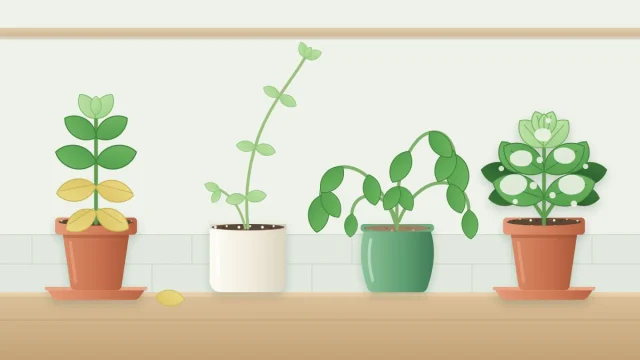
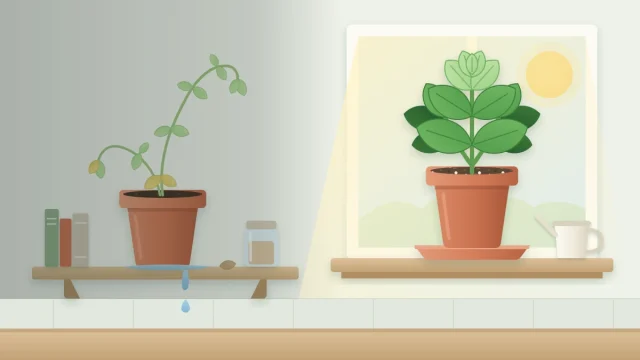
Indoor Herb Gardening Mistakes: 9 Common Beginner Errors
Nine common beginner errors with indoor herbs, from dim shelves and calendar watering to crowded store-bought pots, with what to do instead for each.
Grow Fresh Herbs Indoors
Clear, practical guides to growing basil, parsley, mint, chives and other kitchen herbs on a windowsill or under a lamp.
New to growing herbs indoors? Read these guides in order.
A plain starting guide to growing herbs indoors: the four basics that decide most outcomes, whether to begin with seed or a young plant, how many herbs to start with and what to realistically expect.
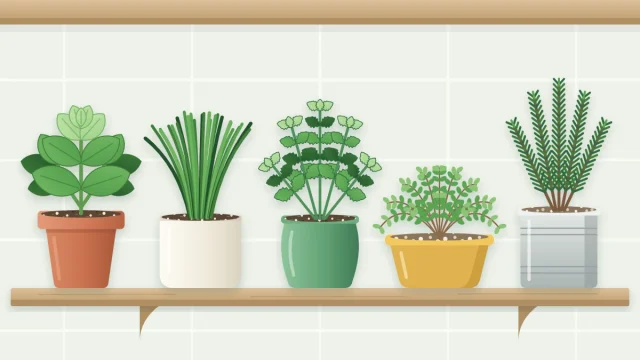
Ten herbs worth trying on a windowsill, grouped by the light and moisture each one asks for, with a comparison table and advice on which herbs can share a pot.
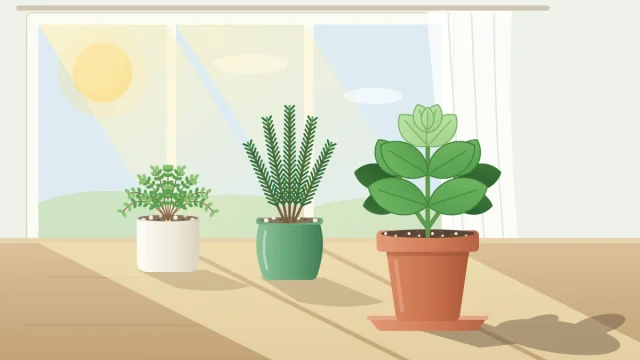
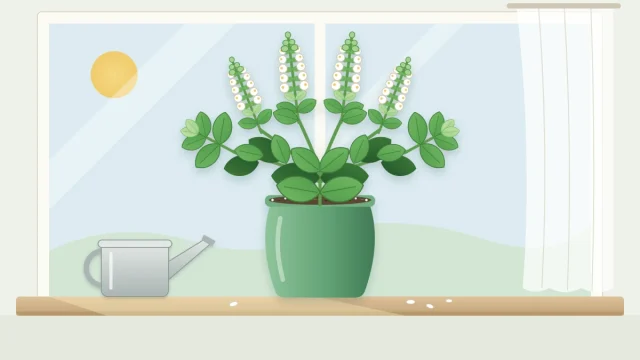
Find out how much light indoor herbs commonly need, which windows give the most, how to check a spot with the hand-shadow test and which herbs cope with moderate light.
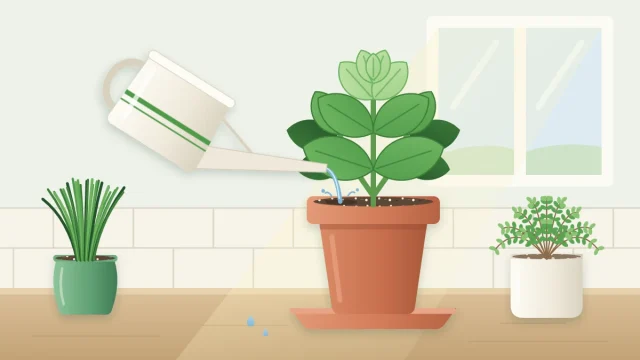
A reliable way to water herbs in pots: check the potting mix with a finger, feel the weight of the pot, then water until it runs from the drainage hole and empty the saucer.
What kitchen herbs need indoors, which ones are easiest to begin with and the mistakes worth avoiding.
Nine common beginner errors with indoor herbs, from dim shelves and calendar watering to crowded store-bought pots, with what to do instead for each.
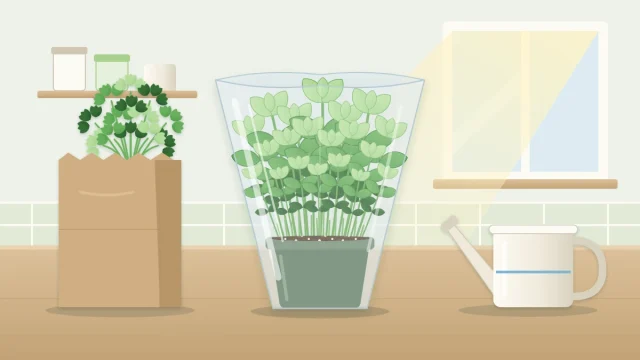
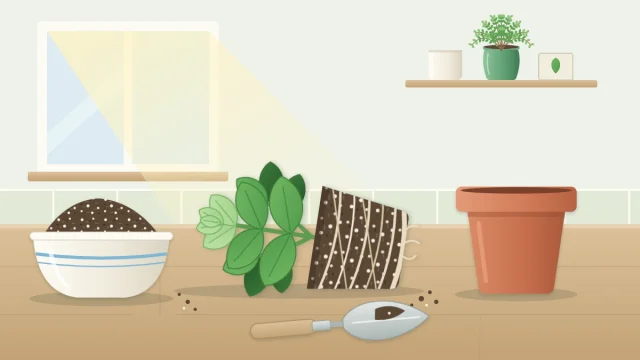
Why supermarket herb pots collapse so quickly at home, and a simple way to split one crowded pot into several that keep producing leaves for much longer.
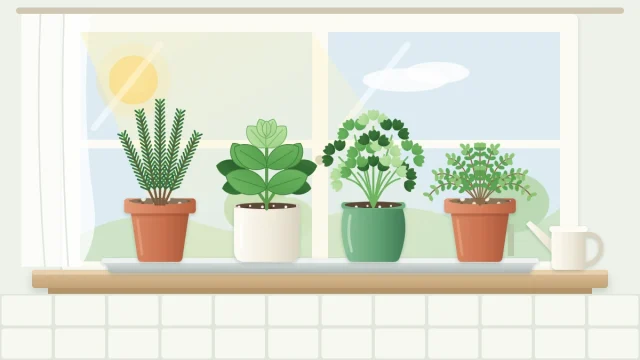
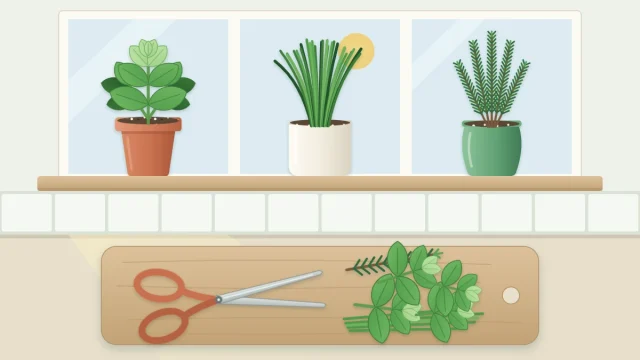
A step-by-step setup for a small row of herbs on a kitchen windowsill: choosing the window, grouping herbs with similar needs, potting up, arranging the pots and caring for them in the first weeks.
Ten herbs worth trying on a windowsill, grouped by the light and moisture each one asks for, with a comparison table and advice on which herbs can share a pot.
Herb-by-herb growing guides: basil, parsley, mint, chives, cilantro, thyme, oregano and rosemary.
Rosemary is one of the harder herbs to keep inside. This honest guide explains the strong light, cool room, careful watering and airflow it needs, and why plants dry up or turn powdery.
Oregano thrives on a sunny sill when it has direct light, a fast-draining mix and a regular trim. Learn how to start it, water it by checking the mix and keep it dense instead of rangy.
Thyme indoors is usually lost to wet potting mix, not neglect. This guide covers the bright light, free-draining mix, terracotta pot and careful watering it needs, plus how to trim it without cutting into old wood.
Cilantro is a short-lived, cool-season herb that flowers quickly in warmth. Learn how to sow it in place, keep it cool and bright, and re-sow pots so there are always fresh leaves to cut.
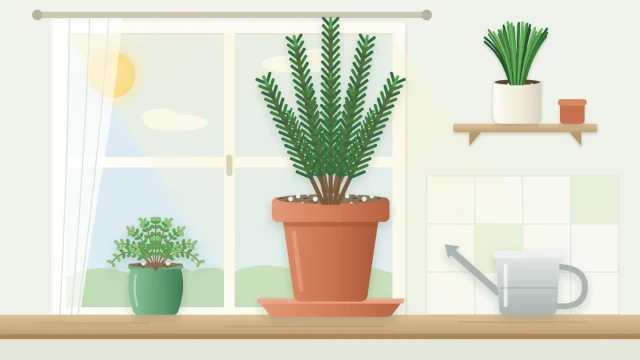
Choosing a windowsill, adding a lamp when daylight is short and watering by checking the soil first.
A jargon-free guide to supplemental light for herbs: when a lamp helps, which types suit a home, how close to place it, how long to run it and how to read your plants.
A reliable way to water herbs in pots: check the potting mix with a finger, feel the weight of the pot, then water until it runs from the drainage hole and empty the saucer.
Find out how much light indoor herbs commonly need, which windows give the most, how to check a spot with the hand-shadow test and which herbs cope with moderate light.
Pot sizes, drainage holes and saucers, potting mix and moving a herb into a bigger pot.
The signs that a potted herb has outgrown its container, how to choose the next pot size, and a clear step-by-step method for repotting, plus when to divide or replace the plant instead.
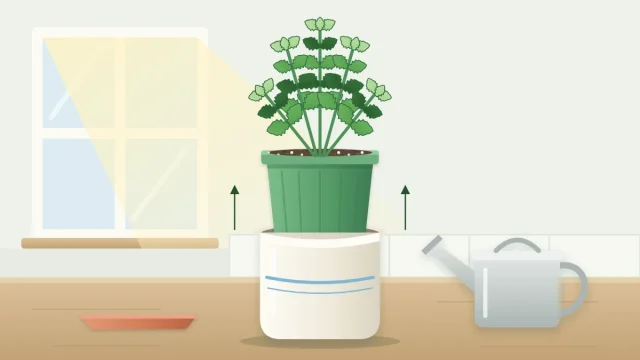
Why herb pots need a drainage hole, why pebbles in the bottom do not replace one, and how to use saucers and cachepots without leaving roots standing in water.
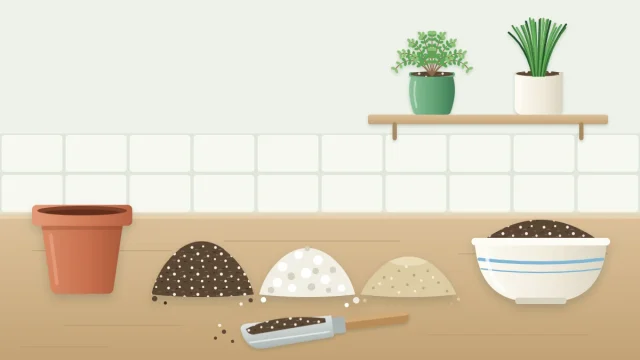
Why garden soil fails in containers, what the ingredients in a bagged potting mix do, and how to adjust a mix for dry-loving herbs such as thyme and rosemary.
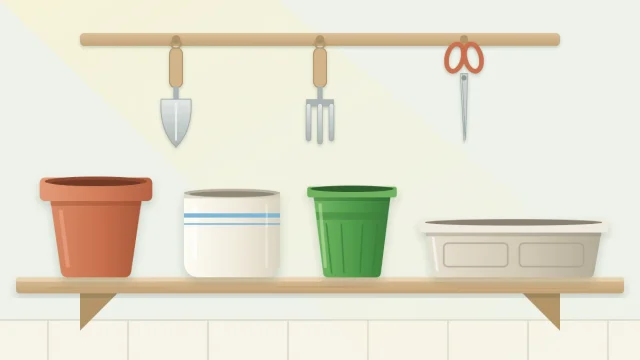
How to choose containers for kitchen herbs: why a drainage hole comes first, what size and depth each herb needs, and how terracotta, ceramic, plastic and self-watering pots compare.
Where to cut, how much to take at once and how pinching and pruning keep a plant bushy.
Why basil, cilantro and other herbs suddenly shoot up and flower, what triggers it in each herb, and which steps delay it and which do not.
The one cut that turns a tall, single-stemmed basil into a bushy plant: where the node is, how far above it to cut, how much to take, and what to do about flower buds.
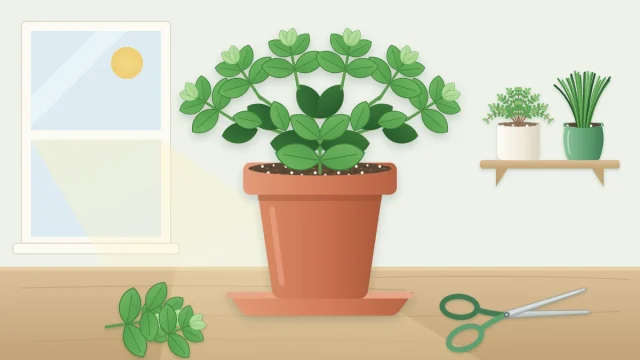
Where to cut each type of herb and how much to take at once, so that basil, chives, parsley, thyme and the rest keep regrowing after every harvest.
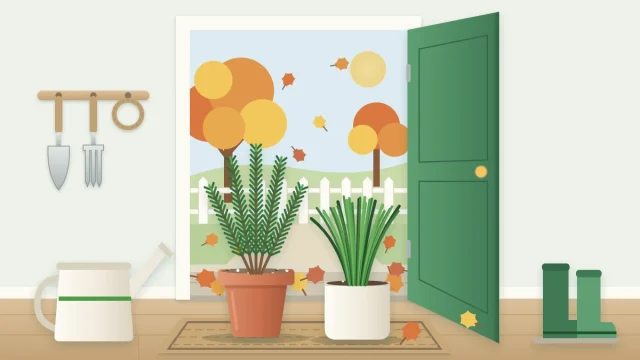
Which garden and balcony herbs are worth moving inside for winter, when to start, and the steps to pot up, check for pests and ease them into lower light.
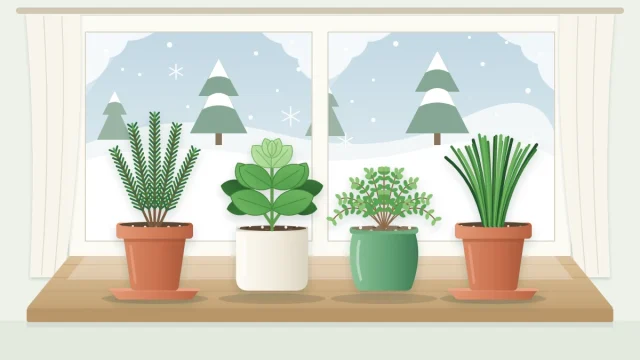
Why windowsill herbs slow down in winter and how to adjust light, watering, position, harvesting and feeding to keep them healthy until spring.
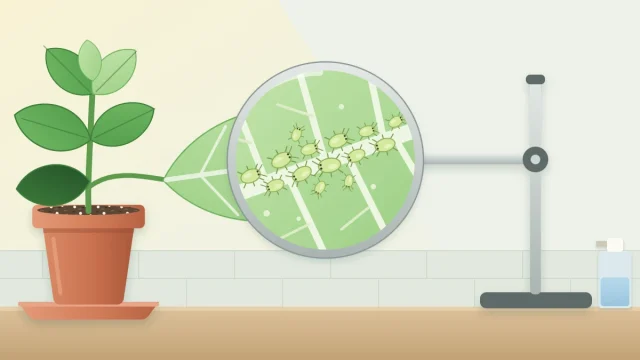
How to recognize aphids, spider mites, whiteflies and fungus gnats on kitchen herbs, and the physical first steps to take: isolate, rinse, pinch and prune.
A symptom table for struggling indoor herbs, with the common possible causes of each and a short checking routine to work out which one applies.
Nine common beginner errors with indoor herbs, from dim shelves and calendar watering to crowded store-bought pots, with what to do instead for each.
Why basil, cilantro and other herbs suddenly shoot up and flower, what triggers it in each herb, and which steps delay it and which do not.
Every guide is listed on one page, from light and watering to pots, soil, seed starting and harvesting. All of them are free to read, with no sign-up needed.